Install and run SRUM-DUMP
Use this journey to produce a documented workbook from verified evidence. The screenshots show a live-system test because that was the original SUSA proof of concept. For casework, point the wizard at working copies in controlled storage.
Prepare the tool and case workspace
Tool provenance
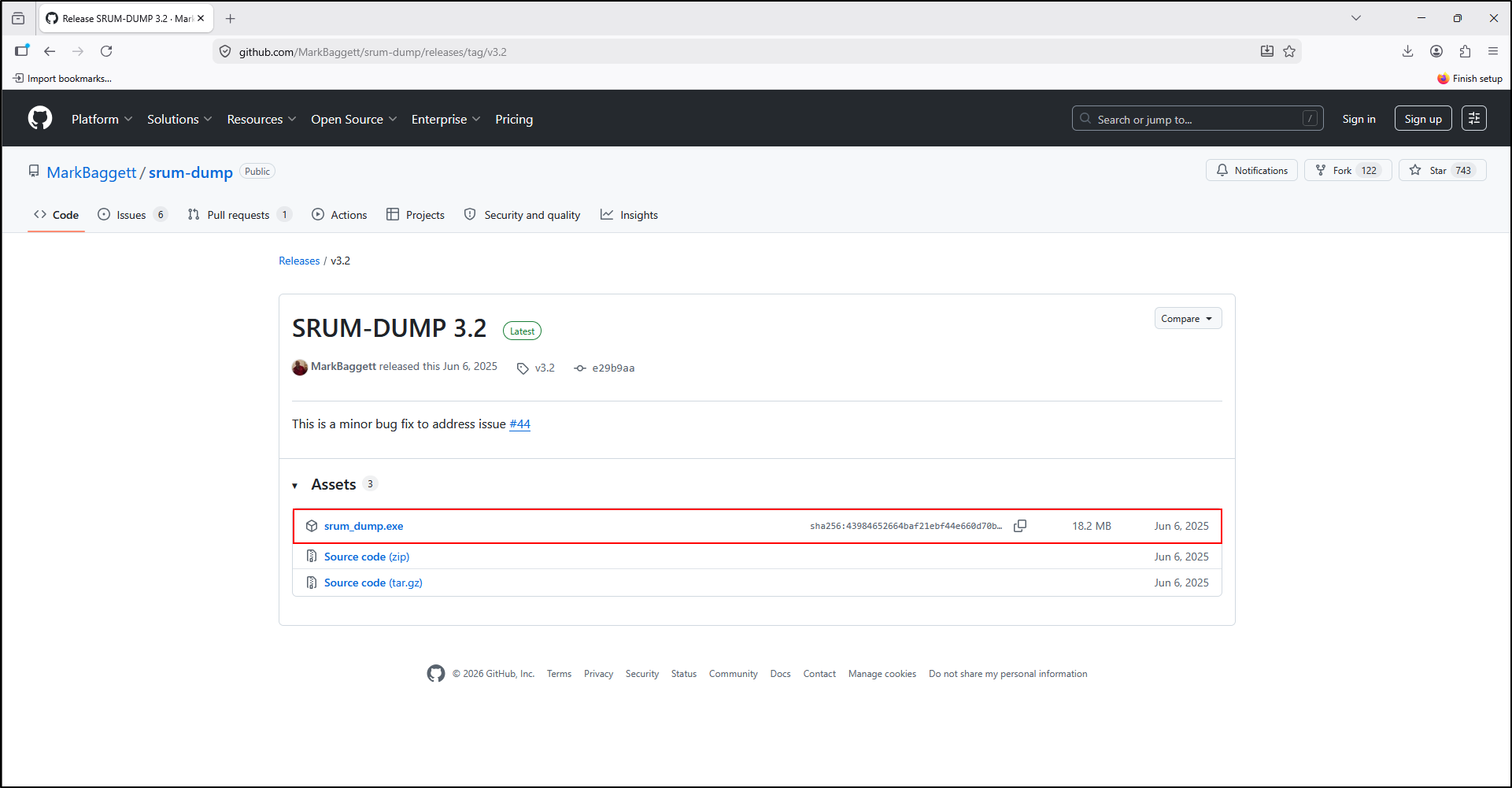
- Download the current Windows build from the official SRUM-DUMP releases.
- Record the release tag, downloaded filename, source URL, download time, and licence.
- Calculate SHA-256 and retain the value with the case notes.
- Place the verified executable in
C:\Tools\SRUM-DUMPor the approved tools directory.
Evidence boundary
- Retain protected acquisition copies of
SRUDB.datand, when available, the matchingSOFTWAREhive. - Create verified working copies and a separate empty output directory.
- Record the source host or image, original paths, acquisition method, time zone, and hashes.
- Do not write parser output into the evidence source directory.
Create a controlled output folder for the proof of concept:
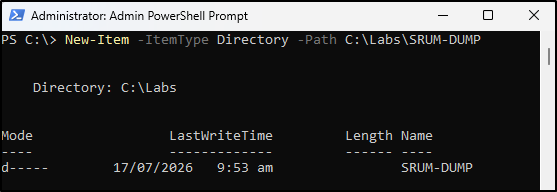
Use a simple folder contract
For a real case, use separate source, working, output, and notes
folders. Record the full paths instead of relying on the folder names to
establish provenance.
Run the guided interface
- Launch the verified buildRight-click
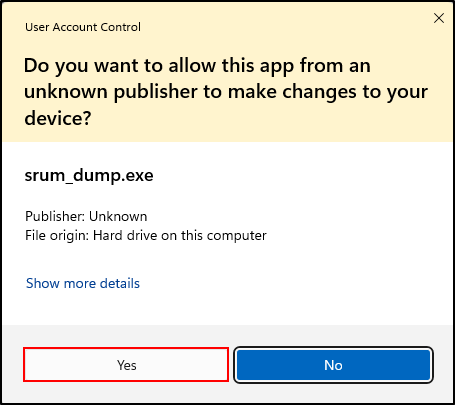
srum_dump.exeand select Run as administrator only when the approved input requires it. Accept the User Account Control prompt.
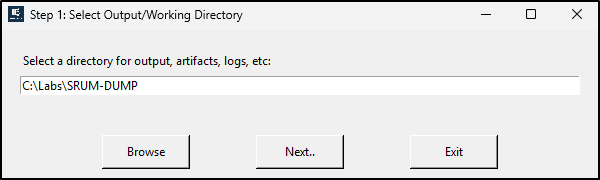
- Select the output directoryChoose a new or empty controlled folder. Confirm it is outside the protected source and working-copy locations, then select Next.
- Select
SRUDB.datChoose the verified working copy. The live default is usuallyC:\Windows\System32\SRU\SRUDB.dat, but use it only for an authorised live-triage task. Select Next.
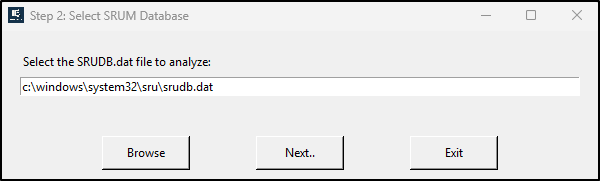
- Add the matching
SOFTWAREhiveThis input is optional but recommended because it can resolve network profiles and other identifiers. Use the hive acquired with the database, or leave the field blank and record the limitation. Select Finish.
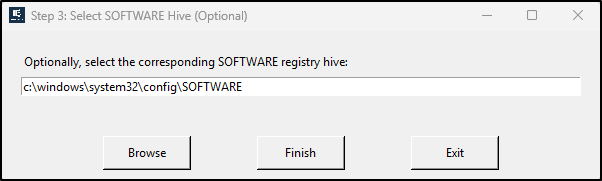
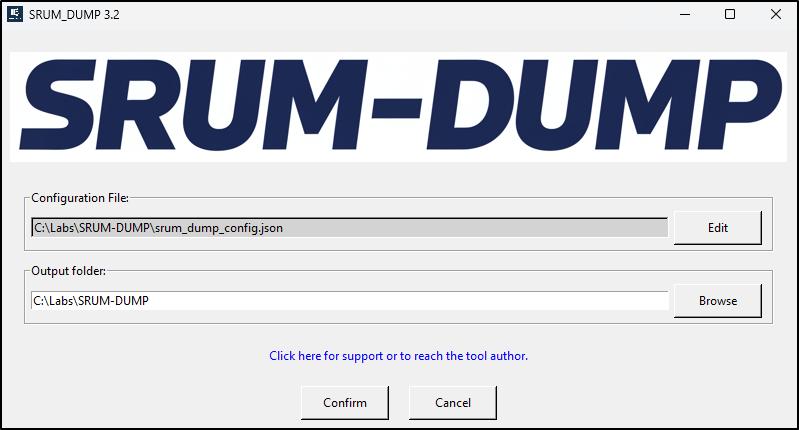
- Review the generated configurationConfirm the output folder and generated
srum_dump_config.json. For a first pass, preserve the generated file unchanged. Advanced analysts can edit a copy to add highlighting or mappings, but must retain the original and document every change. - Start the parseSelect Confirm. Do not treat a green progress bar alone as success. Retain the final record count, log, warnings, parser engine, and produced files.
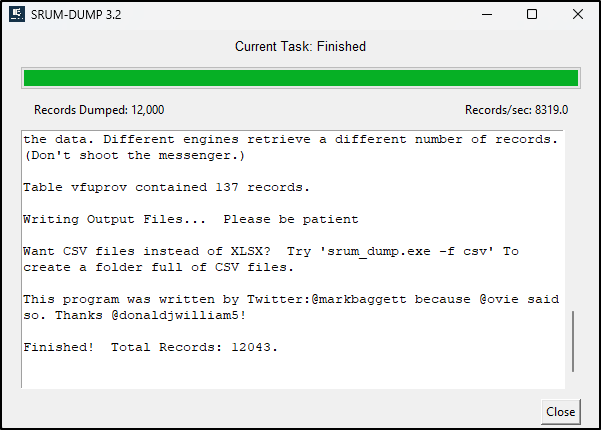
When Current Task: Finished appears, record the displayed total and review the
message pane before selecting Close. The screenshot reports 12,043 total
records and notes that engines can retrieve different counts.
Verify the output package
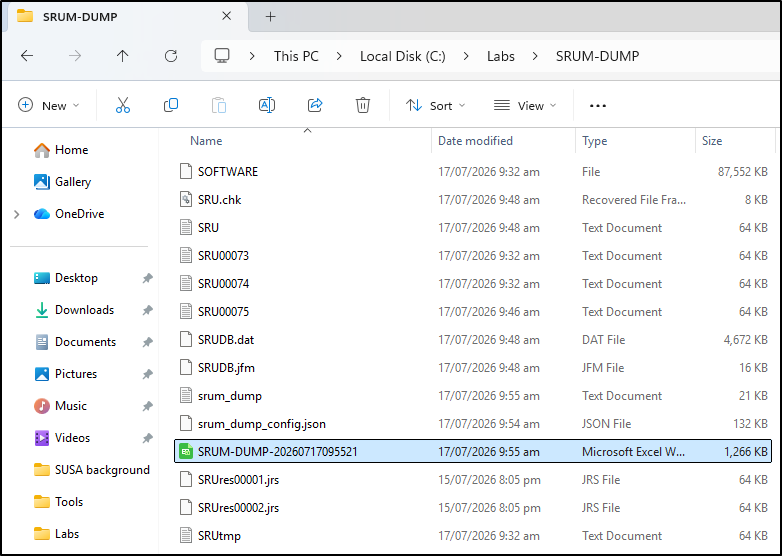
The controlled output should contain the generated workbook or CSV files,
srum_dump_config.json, srum_dump.log, and any other version-specific working
files. Preserve the directory listing and calculate hashes before analysis.
Get-ChildItem 'C:\Labs\SRUM-DUMP' -File |
  Get-FileHash -Algorithm SHA256 |
  Export-Csv 'C:\Labs\SRUM-DUMP\output-sha256.csv' -NoTypeInformation
Optional command-line workflow
The command line is useful for repeatable processing. Confirm available options with the exact build before running it:
Example using verified working copies and a separate output folder:
.\srum_dump.exe `
  -i 'E:\Cases\SUSA-114\working\SRUDB.dat' `
  -r 'E:\Cases\SUSA-114\working\SOFTWARE' `
  -o 'E:\Cases\SUSA-114\output' `
  -e dissect `
  -f xls
The official version 3 help identifies SRUDB.dat as required, the registry
hive as optional, dissect and pyesedb as engine choices, and xls or csv
as output choices. Record the full command. Do not use --NO_CONFIRM until the
workflow and output paths have been validated with the selected version.
Do not silently repair or replace evidence
If the database will not parse, protect the original and record the failure. Try a verified working copy and review the project documentation and known issues. Any recovery, repair, alternate engine, or conversion must operate on a separate labelled derivative and remain documented.
Troubleshooting the run
| Symptom | First check |
|---|---|
| Access denied on a live path | Confirm authority and elevation. Prefer an acquired working copy. |
| Output folder rejected or mixed with old files | Select a new empty folder outside the evidence tree. |
| Network profile names are unresolved | Confirm the matching SOFTWARE hive was supplied and parsed without error. |
| Record count differs between engines | Preserve both commands, logs, outputs, and hashes; do not choose a count without explaining the parser difference. |
| Workbook is missing after completion | Review srum_dump.log, final task text, output format, permissions, and available storage. |
| Processing appears slow | Review log activity and configuration. Dirty-word highlighting can increase processing time. |