PEStudio
What PEStudio does
Guided SUSA tool journey
PEStudio supports malware analysis. In this guide, you will use it to triage a safe training executable and record structure, imports, and indicators. The procedure and screenshots provide the practical reference; the surrounding context explains what to record and how to judge the result.
Tool guide at a glance
Triage a safe training executable and record structure, imports, and indicators.
An inert or purpose-built training sample stored in a disposable isolated analysis VM.
A static observation or capability finding with sample hash, tool output, and confidence statement.
Evidence and safety
Do not execute unknown samples on SUSA. Disable shared folders and credentials, and use only authorised training material. Record the input identifier, tool version, relevant commands or settings, time and time zone, output location, and any errors or limitations as you work.
Choose your journey
01Understand the evidenceLearn the malware analysis concepts and limitations.Complete when you can explain what the evidence can and cannot show.Beginner · No tool required · 15–25 min 02Follow the PEStudio guideWork through the commands, screenshots, and instructional sequence below.Complete when the documented workflow produces its expected output.Guided · SUSA workstation · Time varies 03Interactive labPractise the tool workflow in a safe browser simulation.Complete when the guided result is supported by the case evidence.Beginner · Browser only · 10–20 min 04Full LabInvestigate an authorised training scenario with fewer prompts and preserve a reviewable result.Complete when another analyst can reproduce and verify the outcome.Intermediate · Isolated lab · 45–90 min
How the labs complement this guide
The Interactive Lab is a safe browser simulation for practising the workflow and validation logic. The Full Lab is an independent exercise for an isolated, authorised environment. Confirm the installed tool version and expected output before relying on either exercise in a real case.
Accessing PEStudio in SUSA
PEStudio is a widely used, free static malware analysis tool for Windows that detects suspicious artifacts in executable files (PE, DLL) without running them. It assists security professionals and incident responders by identifying malicious indicators like packed code, hard-coded URLs, and suspicious API imports.
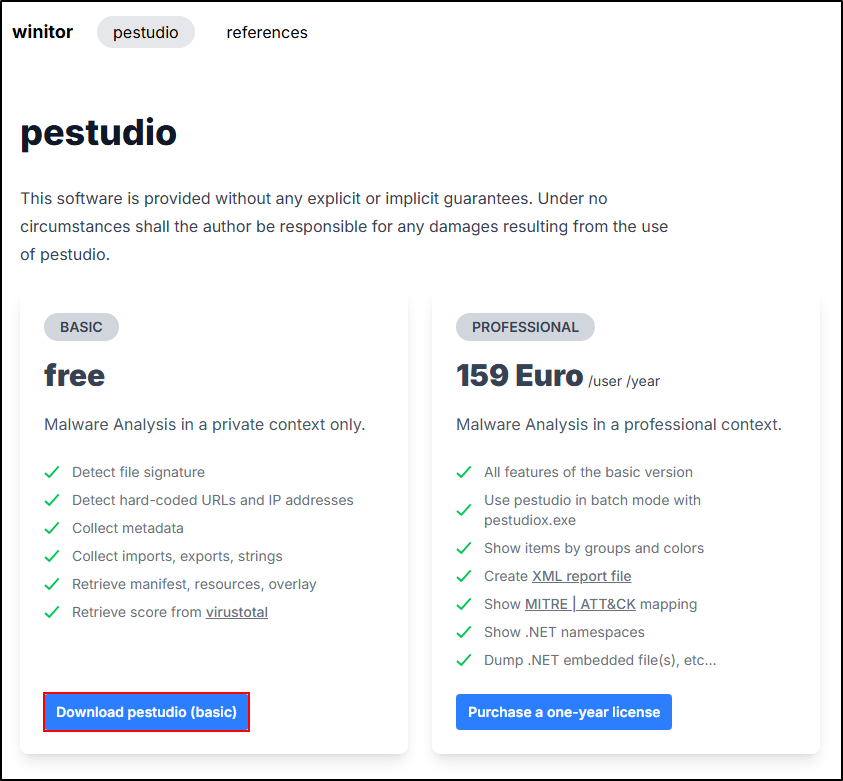
Go to the Winitor download page and download the PEStudio basic version.
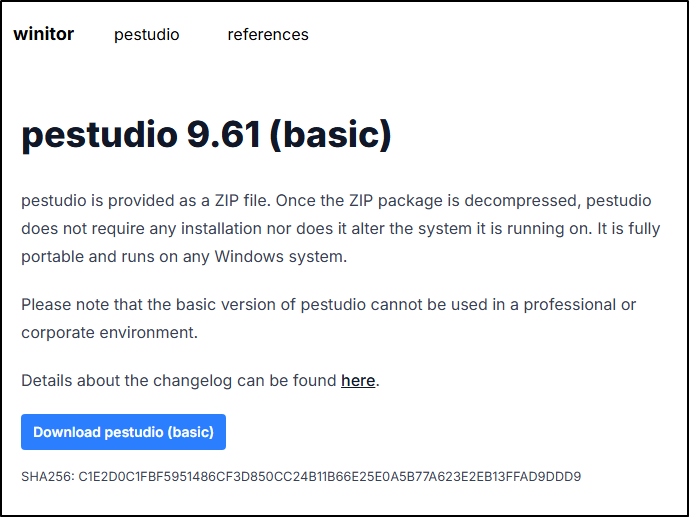
Extract the zip package to C:\Tools folder. This will extract all of its contents in C:\Tools\pestudio.
Double-click pestudio to launch the application.
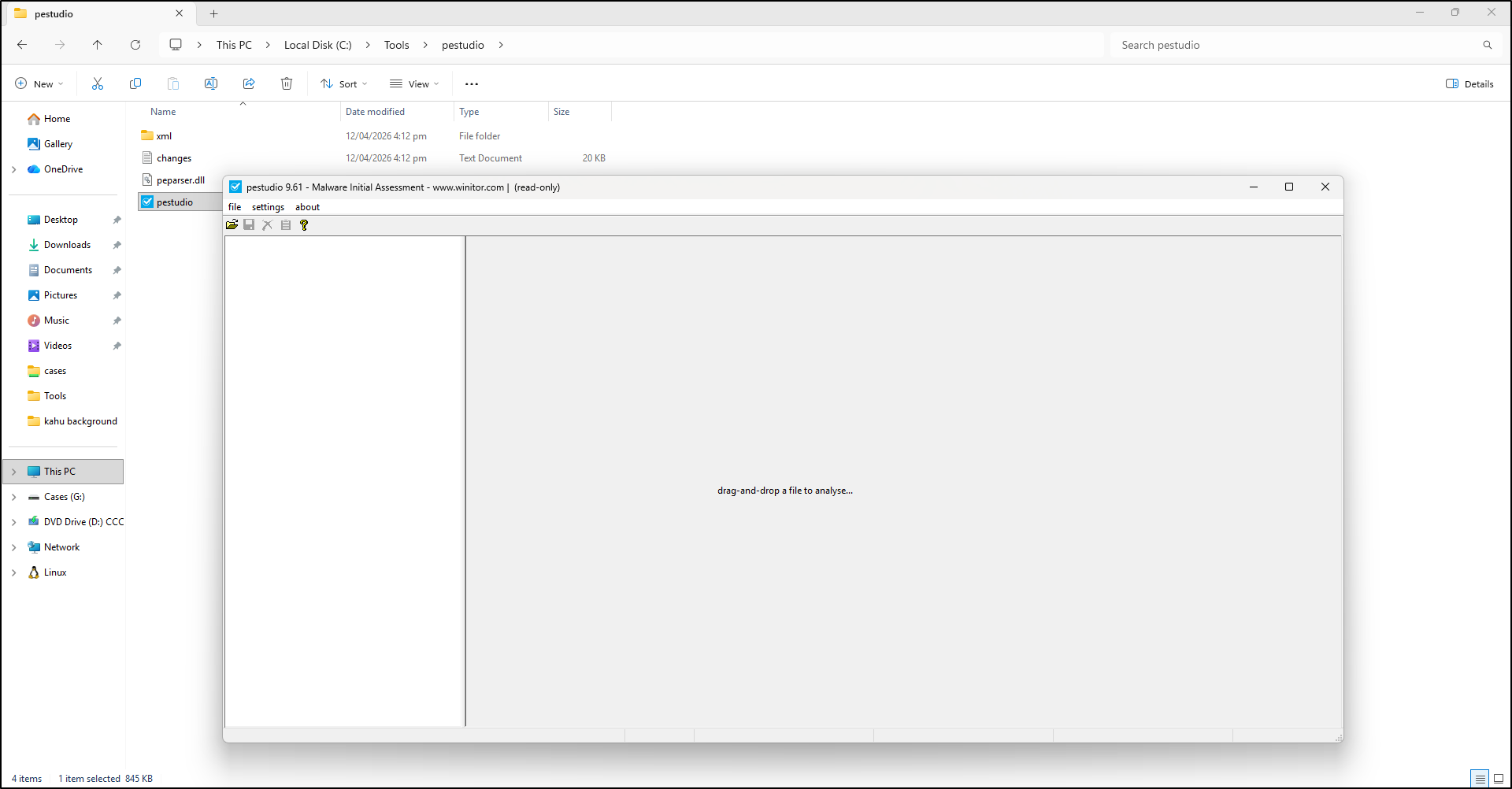
Static Malware Analysis with PEStudio
This method allows you to examine malware without running it, using tools that extract metadata, strings, headers, and indicators from the binary. It’s a safe way to assess risks and behaviours.
1. Launch PEStudio
On your analysis VM, open C:\Tools\pestudio\pestudio.exe.
Click File → Open and select your sample (e.g. C:\Tools\knr.exe).
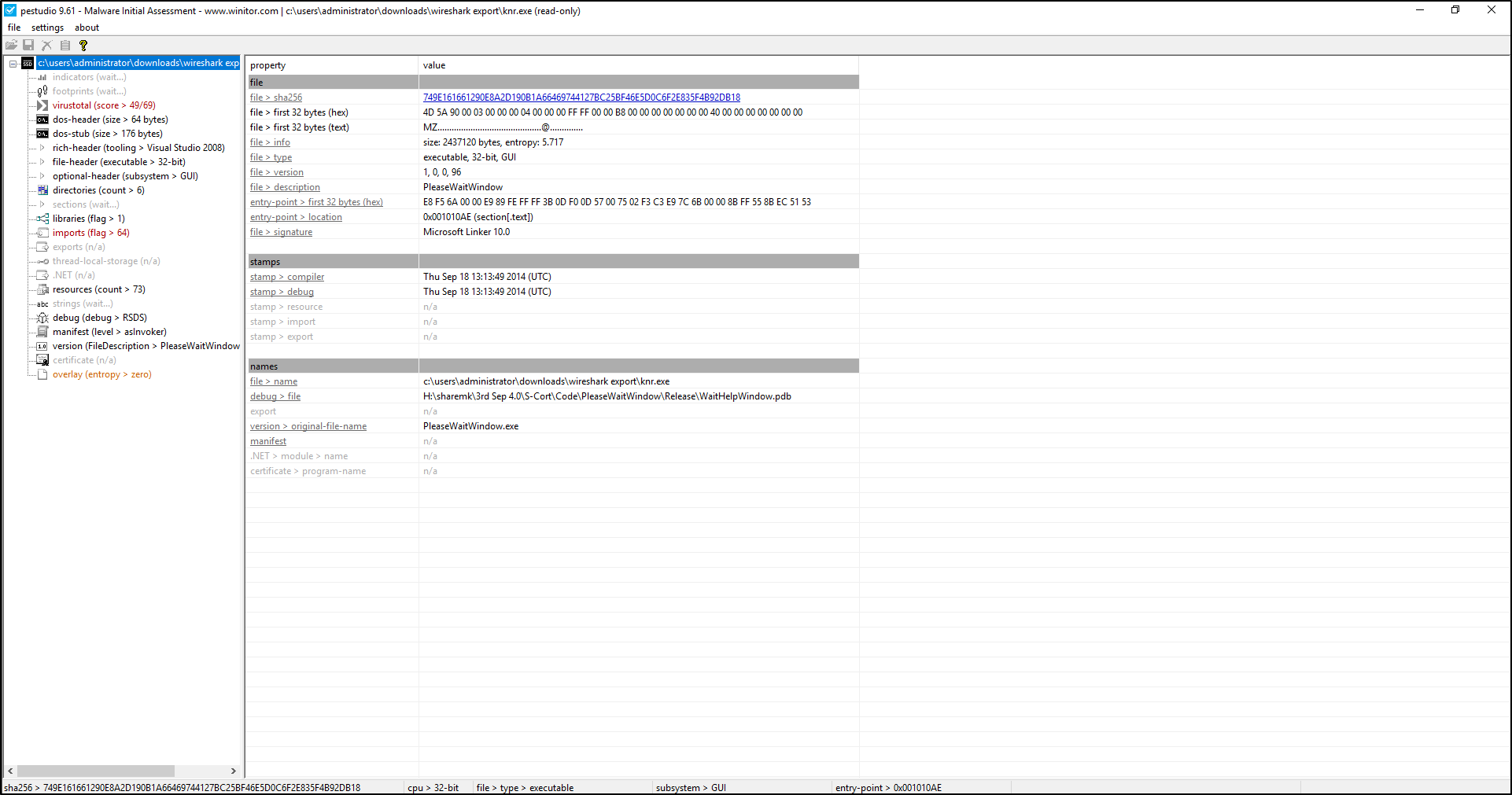
2. Check the File’s Reputation
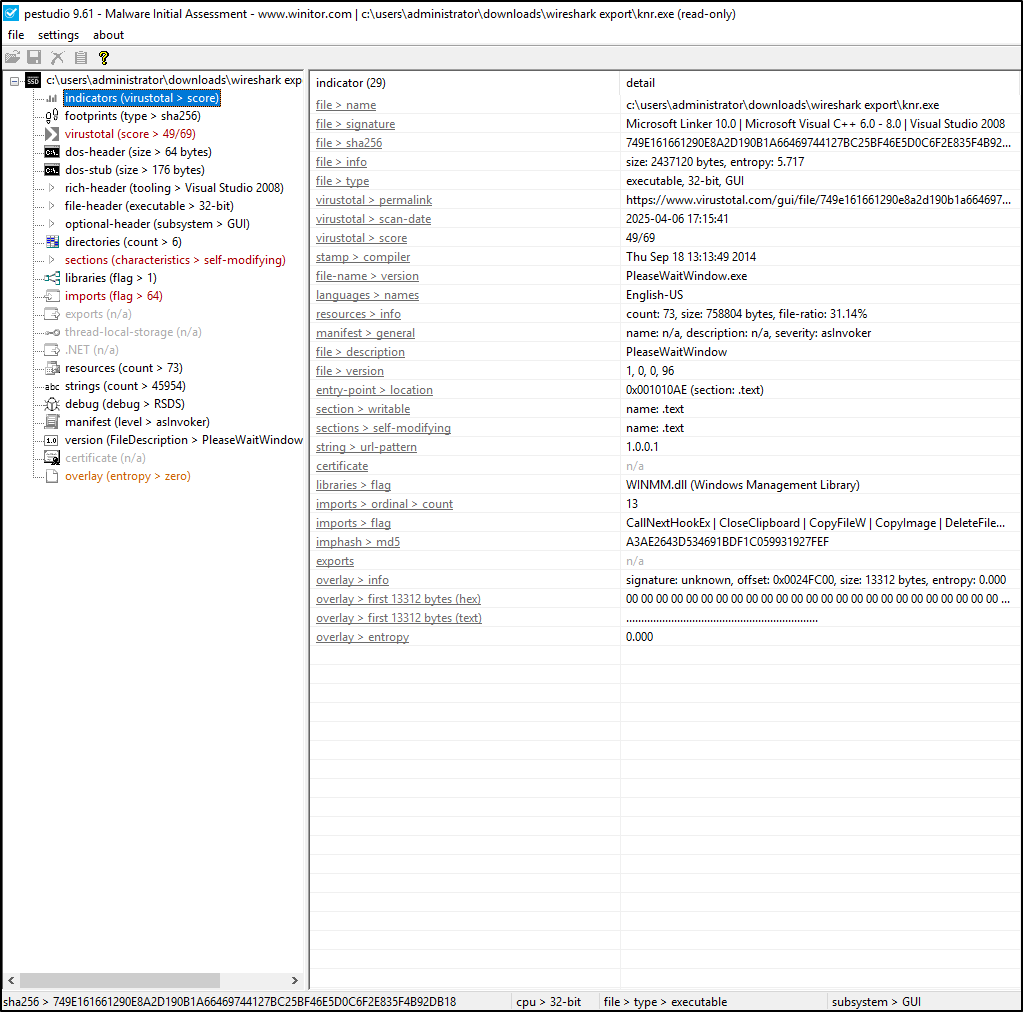
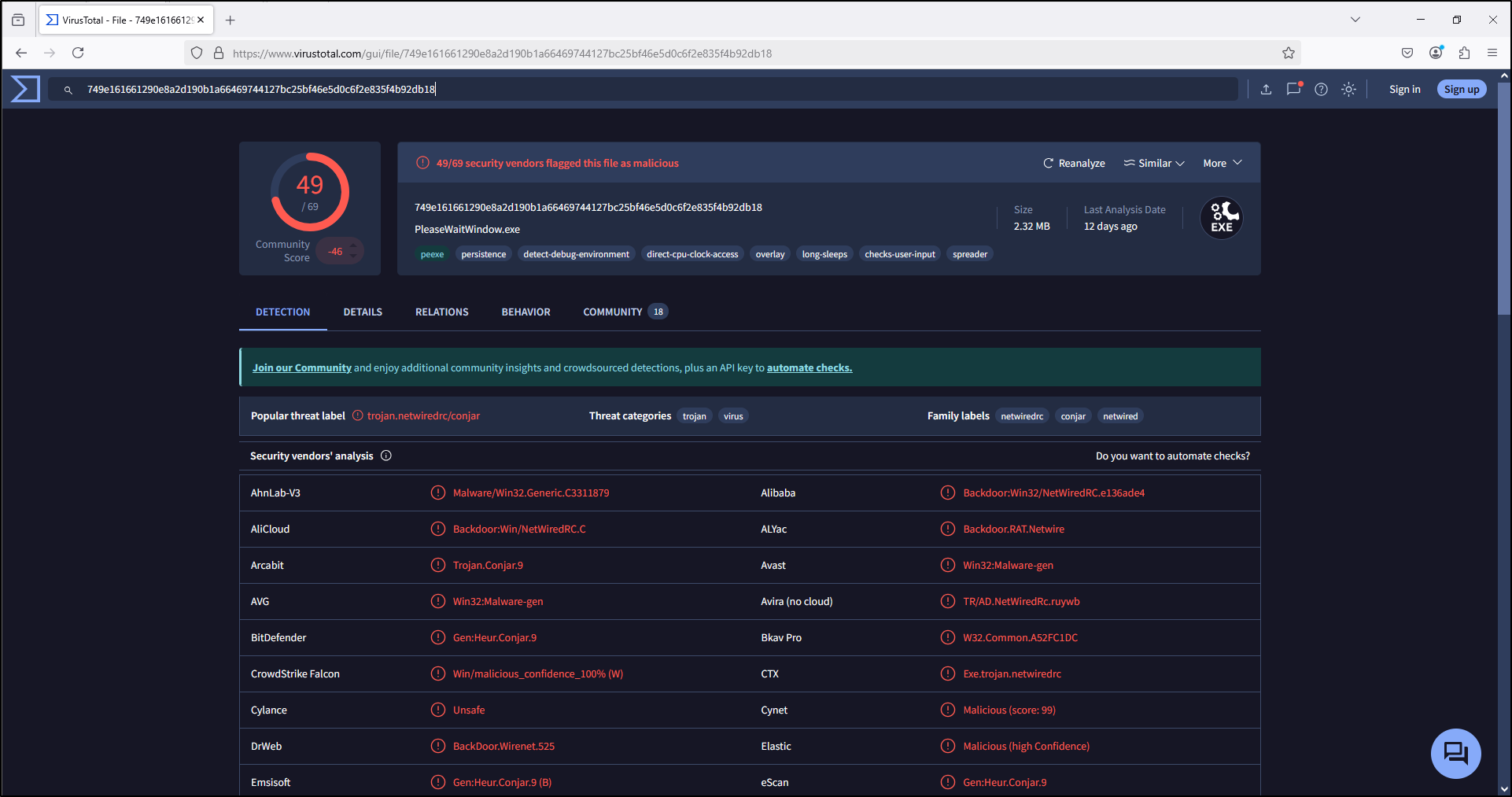
PEStudio will calculate hashes and, if you’re online, automatically check the file against VirusTotal. You can also manually copy the SHA256 and check it at VirusTotal.
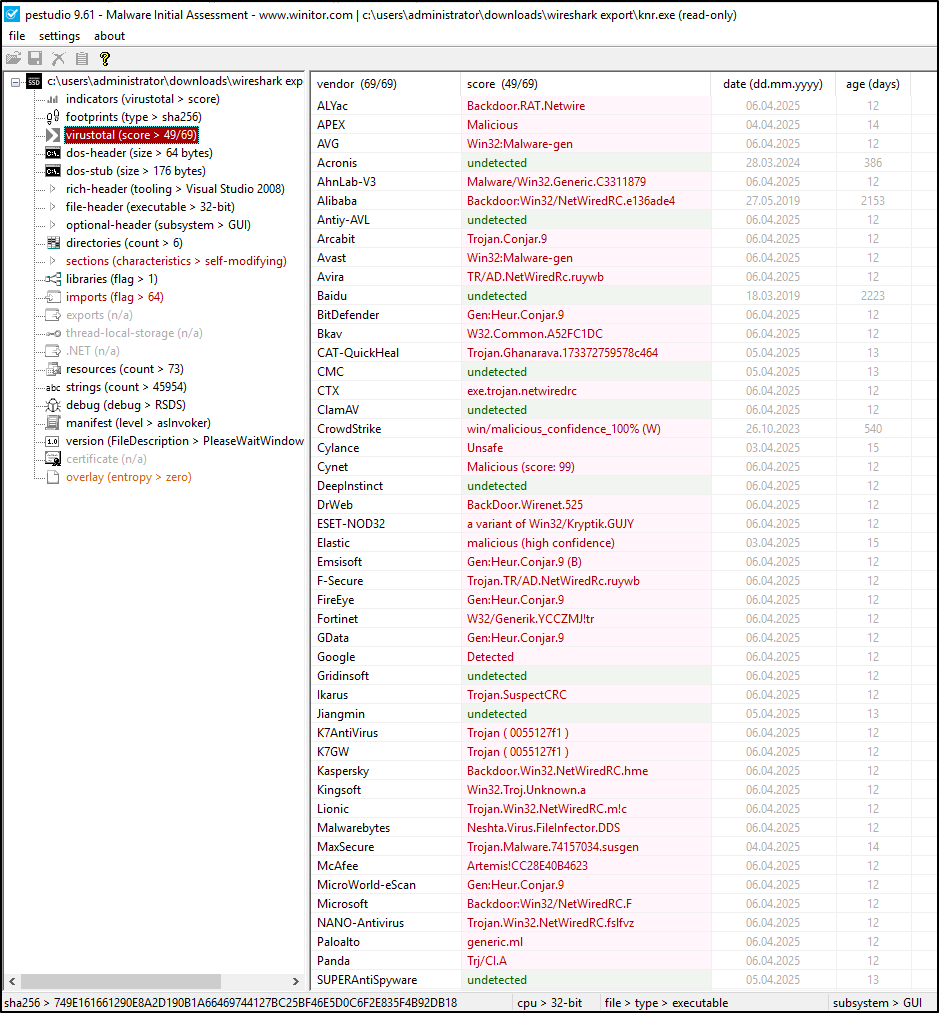
3. Review File Details
Explore:
- Headers: Shows compiler info, timestamps
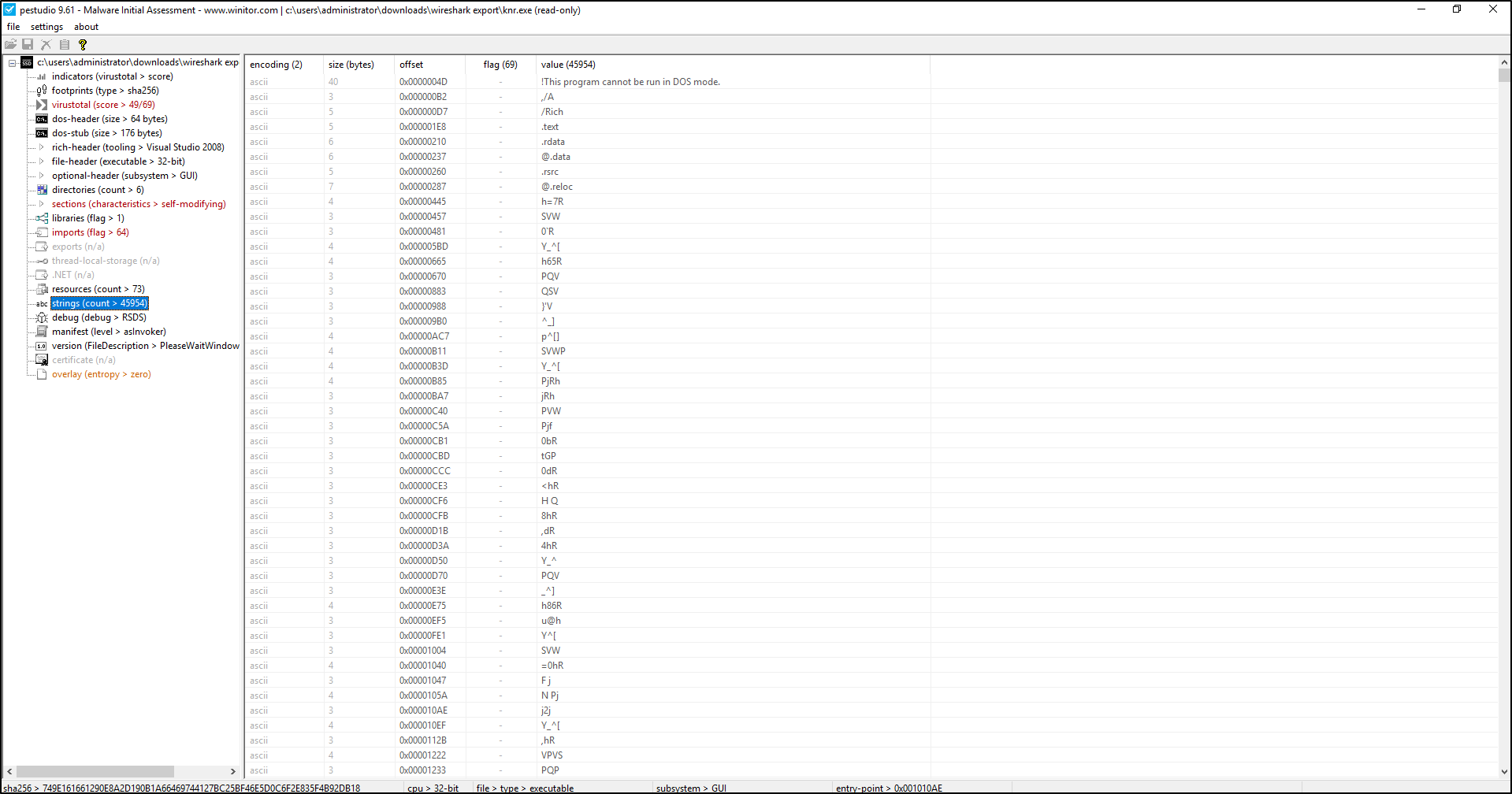
- Strings: Reveals embedded URLs, commands, and file paths
- Indicators: Flags potential signs of packing, obfuscation, or suspicious behaviours