Installing WSL
SUSA uses Windows Subsystem for Linux (WSL) for selected command-line tools and
Linux-based workflows. Complete this setup in the SUSA virtual machine before
following a guide that opens Ubuntu or invokes wsl.exe.
Current and preserved installation paths
Current Windows 11 systems can normally install WSL and Ubuntu from an
administrator PowerShell window with wsl --install. The screenshots below
preserve the more explicit feature-and-Store workflow used for the SUSA
reference build. See Microsoft's current WSL installation
guidance if the displayed
prompts differ.
Installing Windows Subsystem for Linux (WSL)
Enable the Windows Subsystem for Linux
Before installing a Linux distribution, enable the Windows Subsystem for Linux optional feature.
Open PowerShell as an administrator (Start > PowerShell > right-click PowerShell > Run as administrator) and run the following command:
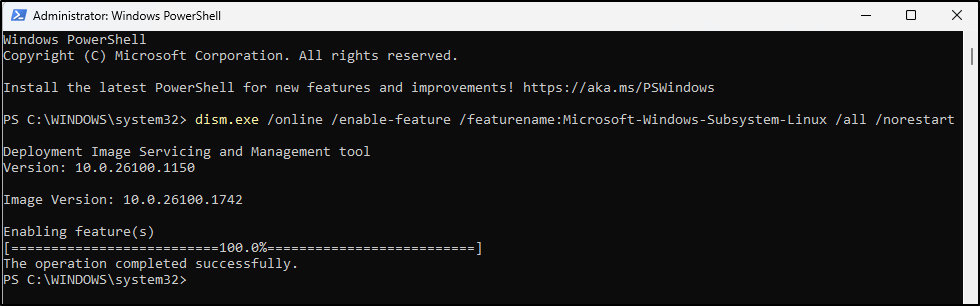
Restart the computer to apply the changes.
Installing Ubuntu as WSL
Open the Microsoft Store and search for your preferred Linux distribution. For this guide, Ubuntu was used.
From the distribution's page, click Get to begin the installation.
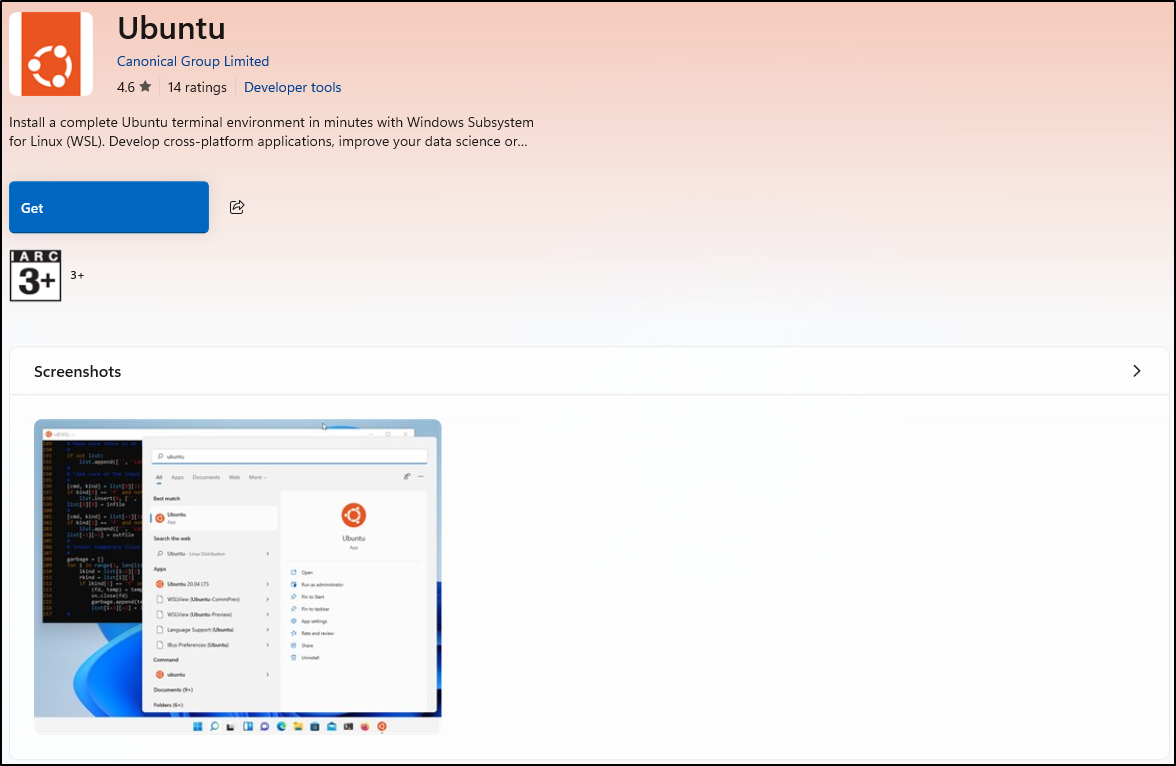
After the download is complete, click Open.
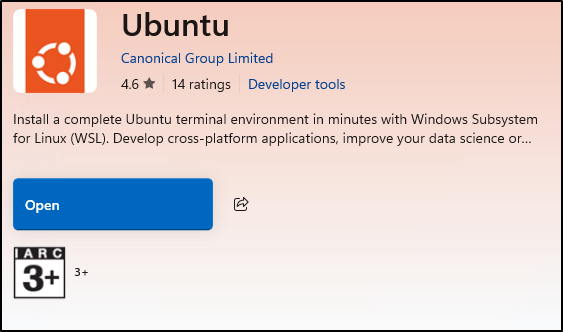
This will open two Command Prompt windows. The first window indicates that the Windows Subsystem for Linux feature has not yet been installed, while the second prompts you to install or update WSL to the latest version.


On the second terminal, press any key to install WSL 2.
When prompted by User Account Control, select Yes.
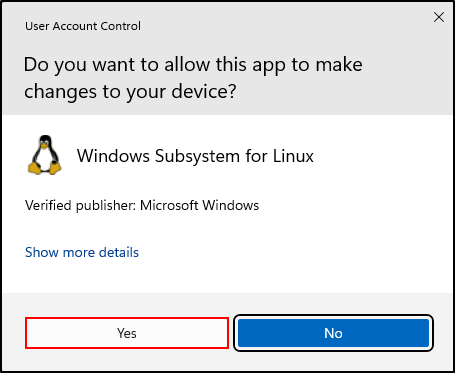
After the installation is complete, the following message will be displayed:
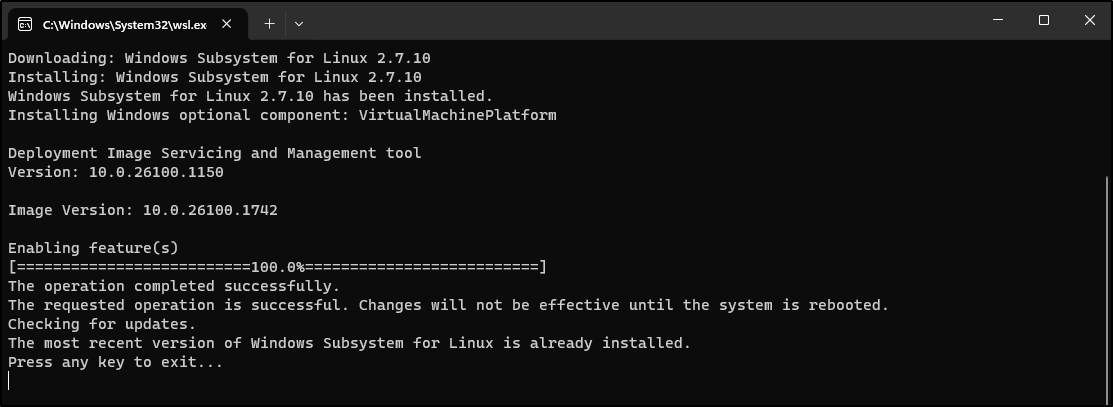
Press any key to exit.
Open PowerShell as an administrator and set the default WSL version to 1 by running the following command:
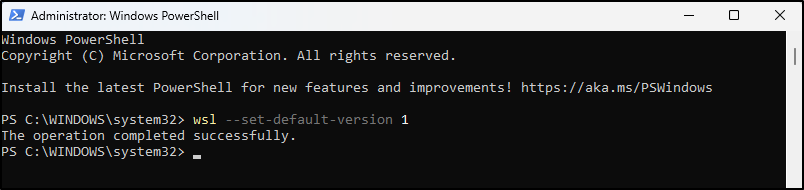
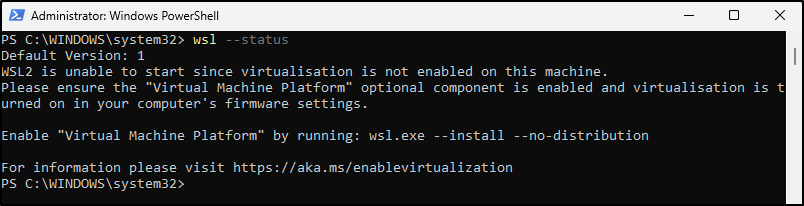
Verify that the default WSL version is set to 1 by running:
The default applies to distributions installed or imported afterwards. To see the version used by each installed distribution, run:
Record the distribution name and version because later SUSA commands may use a specific Ubuntu instance or import an additional distribution.
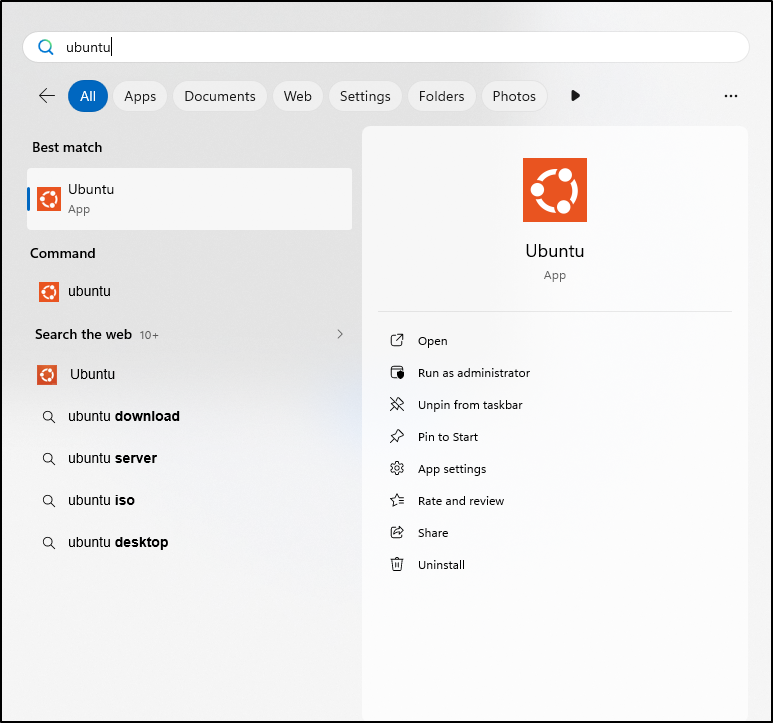
From the Start menu, search for Ubuntu and open it.
The first time you launch the Linux distribution, a console window will open while the files are extracted and configured. This process may take one or two minutes. Subsequent launches should complete in less than a second.
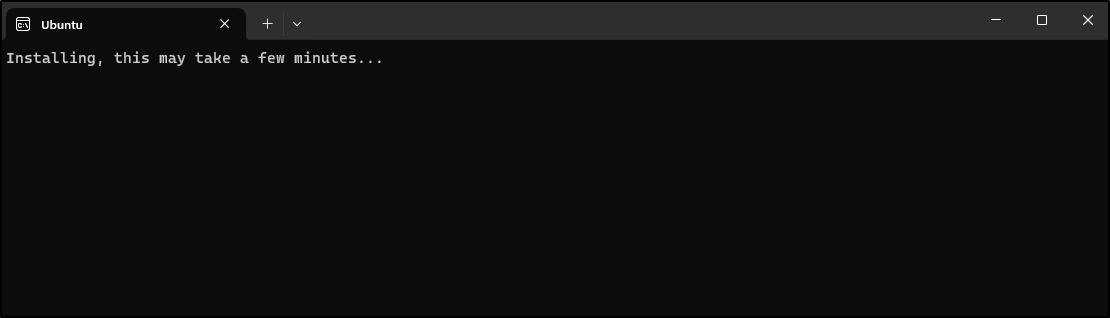
You will then be prompted to create a user account and password for the Linux distribution.
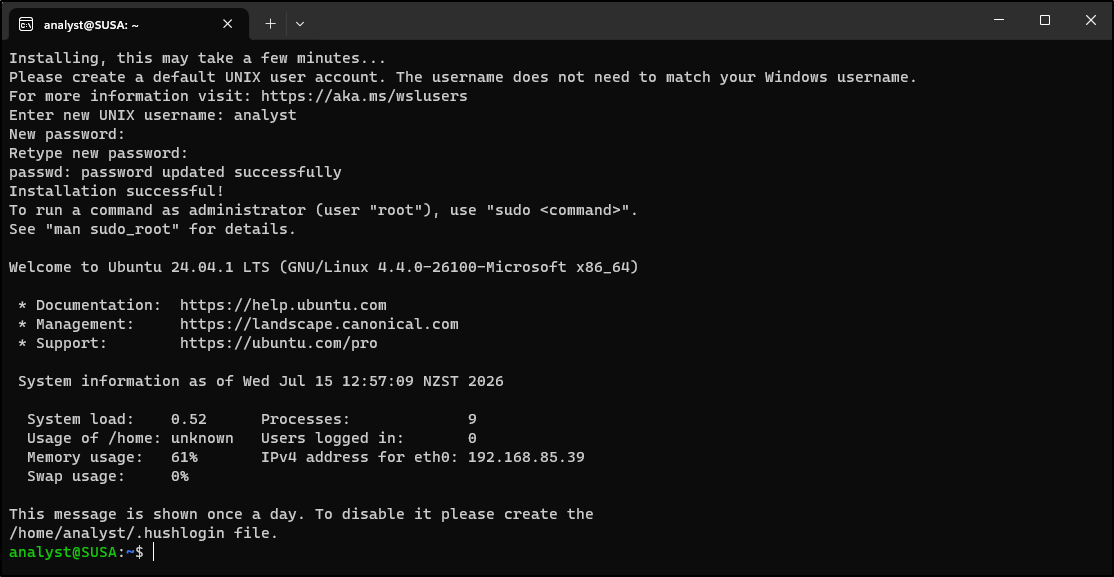
You have now successfully installed and configured a Linux distribution integrated with Windows.
Pinning WSL to the Taskbar
Select Start. Under Recommended, locate Ubuntu, right-click it, then select Pin to taskbar.
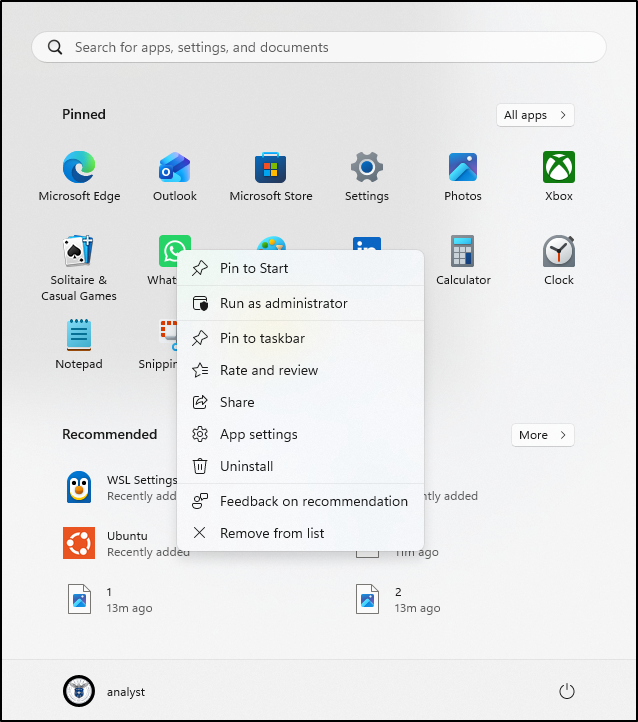
The Ubuntu icon should now appear on the taskbar, providing quick access to the WSL environment.
